Canopy Series  /  Model 01
Edition of 2,400  —  Autumn MMXXVI

The forest,
at the edge
of hearing.

Arbórea Canopy One over-ear headphones in moss green with walnut earcups
Canopy One

An over-ear headphone built from oiled walnut, recycled aluminium and forty-two hours of quiet. Tuned by ear, in rooms with windows open.

42hr
Battery, ANC on
Ten minutes on the cable returns a further six hours.
40mm
Bio-cellulose driver
Grown, not moulded. Pressed in a single sheet.
−38dB
Adaptive silence
Eight microphones, sampled 48,000 times a second.
249g
On the head
Balanced at the crown so it disappears by hour two.
01  —  The idea

We did not set out to
block the world out.

Most noise-cancelling headphones are engineered like a sealed room: airless, flat, faintly pressurised. Canopy One was tuned against a different reference — the particular hush of a forest at midday, where sound is not absent but ordered. Wind above. Silence beneath.

That meant building the cup from materials that behave like a room rather than a box. Walnut for the low decay, aluminium for the rigidity, wool felt for the rest. Then leaving them mostly alone.

Light falling through a stand of tall pines
Plate 01 — Reference roomSerra da Estrela, 06:40
The reference

A forest is the only room we know of that is quiet and alive at the same time.

Our acoustic team spent eleven mornings recording the same hillside — impulse responses, ambient floors, the decay of a single clap between trunks. Those recordings became the target curve. Everything else on this page is downstream of them.


Recordings
211
Tuning revisions
37
Arbórea brand plate: canopy light texture, leaf vein pattern, and the swallow mark
Plate 02 — Canopy light, leaf vein, the swallow mark Arbórea visual system, sheet 3 of 9
02  —  Materials

Three materials.
Nothing hidden.

Each part of Canopy One can be named, sourced and replaced. There is no unnamed composite, no glued seam, no part we would rather you not ask about.

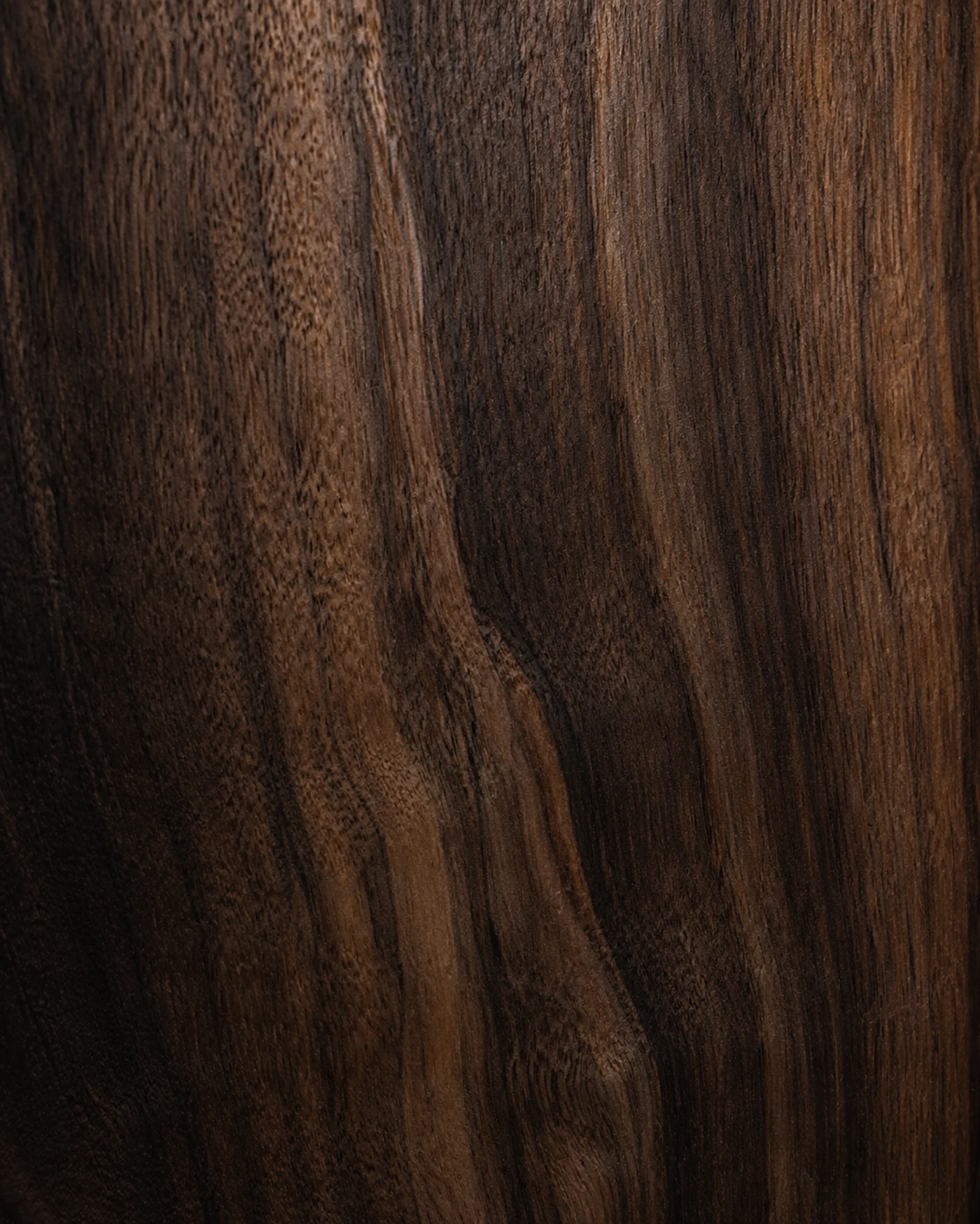
Macro photograph of oiled American black walnut grain
01

American black walnut,
oiled and left open.

Cut from FSC-certified stock in Pennsylvania, air-dried for nine months, then finished with a hardwax oil rather than lacquer. The grain stays porous, which is why it damps the cup instead of ringing it — and why each pair darkens differently over its first year.

OriginPennsylvania, USA
FinishHardwax oil, 2 coats
ReplaceableYes — 4 screws
Macro photograph of brushed anodised aluminium
02

Recycled 6063 aluminium,
anodised in one bath.

The yoke and gimbal are milled from 92% post-consumer aluminium, brushed along a single axis and anodised once — no dye, no secondary colour pass. What you see is the oxide layer itself, which is why the tone shifts slightly with the light.

Recycled content92%
AnodisingType II, undyed
Fatigue tested40,000 folds
Dense canopy of trees photographed from above as a woven texture
03

Canopy felt — merino wool
over memory foam.

The earpad is a fifteen-millimetre memory foam wrapped in undyed merino, chosen because wool moves moisture the way bark does: slowly, without becoming cold. Pads pull off magnetically and cost $29 to replace.

CoverUndyed merino, 320gsm
AttachmentMagnetic, no tools
Replacement$29 per pair
03  —  Acoustics

Tuned in a room,
not in a lab.

The measured curve below is not flat, and it was never meant to be. It follows the ear's own preference for a gentle rise below 120 Hz and a long, unhurried descent above 6 kHz — the shape of sound outdoors.

20 Hz2001 kHz6 k20 kHz
— Canopy One --- Forest reference
  • i

    Eight microphones, two of them inward

    The inner pair listens to what actually reaches your ear, correcting for hair, glasses and the shape of your head 48,000 times a second.

  • ii

    Canopy mode, not transparency

    A third setting that keeps low rumble suppressed while passing voices and birdsong through untouched. Useful on a trail; useful in an office.

  • iii

    Wired listening stays analogue

    Plug in the 3.5 mm cable and the DSP steps aside entirely. No processing, no battery required, no colouration added.

Canopy One resting on a walnut desk beside a laptop in warm lamplight
Plate 03 — Late listening, studio floorPorto, 21:15
04  —  Colourways

Four finishes.
One walnut.

Finish 01 of 04
Moss

The founding colour. A deep, matte forest green mixed to match the underside of a laurel leaf in shade — dark enough to read as black indoors, unmistakably green in daylight.


All finishes
$389
Reserve this finish
A path running through tall trees
Canopy One photographed on a cream studio backdrop
Forest ridgeline in morning light
Rolling wooded hills under low cloud
Plates 04–07 — Field and studioPhotographed on 6×7, no digital grade
06  —  Compare

Which one is
yours?

Specification
Canopy One
$389 · This page
Canopy One Studio
$549
Grove Mini
$229
Driver40 mm bio-cellulose45 mm bio-cellulose33 mm paper composite
Adaptive noise cancelling  −38 dB  −42 dB  −26 dB
Canopy mode
Battery, ANC on42 hours38 hours26 hours
Walnut earcup plate  Figured walnut—  Recycled board
Recycled aluminium frame  92%  92%—  Bio-polymer
Analogue wired bypass  Balanced 4.4 mm
User-replaceable battery
Weight249 g288 g196 g
Warranty5 years5 years3 years

All three share the same tuning philosophy and the same repair programme. Studio adds a balanced connection and a larger driver for mixing; Grove Mini trades the walnut plate for weight.

“The first noise-cancelling headphone that doesn't feel like being put underwater. You notice the quiet, then you forget it.”
Field Notes Quarterly
“Arbórea publishes the bill of materials. Almost nobody in this category does, and after a week with the Canopy One you understand why they can.”
The Long Object
“Walnut that darkens, aluminium that isn't dyed, pads that come off with your fingers. Designed to be lived with rather than replaced.”
Slow Design Review
07  —  Questions

Before you reserve.

When does the first run ship?+
Reservations placed now ship in the second week of October. We build in batches of four hundred, and we would rather tell you a late date and keep it than a early one and miss it. You are charged when your pair is boxed, not today.
Will the walnut look like the photographs?+
Close, but not identical. Each plate is cut from a different board, so the grain and the starting tone vary. Over the first year an oiled walnut plate deepens by roughly two shades. We consider this a feature and will not replace a pair for grain variation — though we will happily send you photographs of the actual boards before we cut yours.
What does the 60-night trial involve?+
Wear them for sixty nights. If they are not for you, we send a prepaid box, refund the full amount including original shipping, and refurbish the pair for our certified-renewed programme. No questions, no restocking fee, no phone call required.
Can I repair them myself?+
Yes. The full service manual is public, every fastener is a standard Torx T6, and we sell each part individually — drivers, batteries, headband, hinges, pads, cables. We hold parts in stock for ten years after a model is discontinued.
How does Canopy mode differ from transparency?+
Transparency modes usually pass everything through, including the traffic. Canopy mode keeps the cancellation active below about 300 Hz — engines, ventilation, cabin rumble — while letting voices and higher detail arrive unprocessed. The result is closer to standing in a wood than to taking the headphones off.
Is the walnut sustainably sourced?+
Every board is FSC-certified and traced to one of three Pennsylvania mills, listed by name in the material passport that ships with your pair. We plant twelve trees per unit through a verified partner and publish the planting records annually.
Autumn MMXXVI  —  Edition of 2,400

Reserve the
first run.

$50 holds your place and your finish. The balance is charged the day your pair is boxed in Porto, and you have sixty nights from delivery to change your mind.